
What are Higher Order Aberrations?
Higher-order aberrations (HOAs) are optical imperfections that can occur in the human eye, causing deviations from ideal vision. In addition to the more well-known lower-order aberrations (LOAs) like nearsightedness (myopia), farsightedness (hyperopia), and astigmatism, higher-order aberrations involve more complex irregularities in the eye's optical system.
While lower-order aberrations can be corrected with glasses or contact lenses, higher-order aberrations are more challenging to correct for and require specialized equipment and materials.
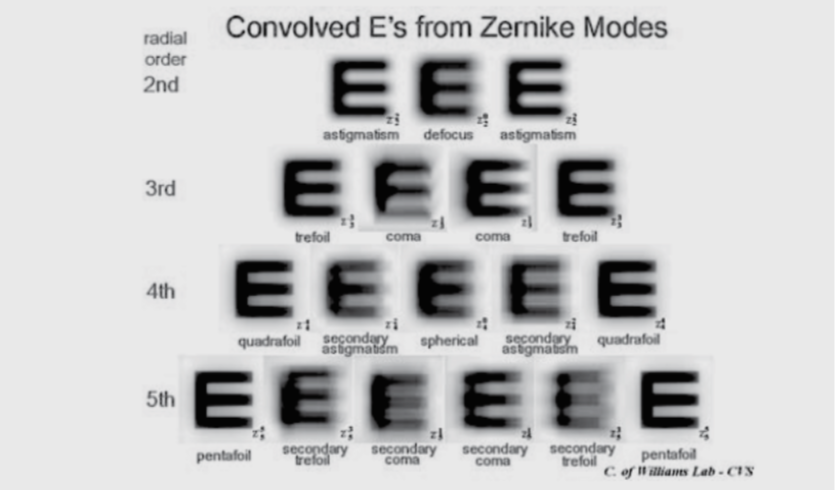
A chart showing how different lower and higher order aberrations affect quality of vision.
Visual symptoms of HOAS
Halos: Concentric circles or rings around bright light sources, such as headlights or streetlights.
Starbursts: Radiating lines or rays extending from bright light sources.
Ghosting: Duplicated or overlapping images.
Coma: Distortion resembling a comet-shaped blur.
Double vision: Seeing two images instead of one.
Irregular astigmatism: Uneven distortion in different directions.
These aberrations can result from factors such as irregularities in the corneal shape, scarring, previous eye surgeries, those with large pupils, or certain medical conditions affecting the eye such as keratoconus or other corneal dystrophies. They can also be induced by the aging process or from changes in the eye's internal structures.
Managing higher-order aberrations
Although custom scleral lenses are able to greatly improve the vision quality of an irregular cornea, there may still be HOAs that distort the vision. For those looking to improve their vision further, we use wavefront-guided technology to optimize and enhance their vision.
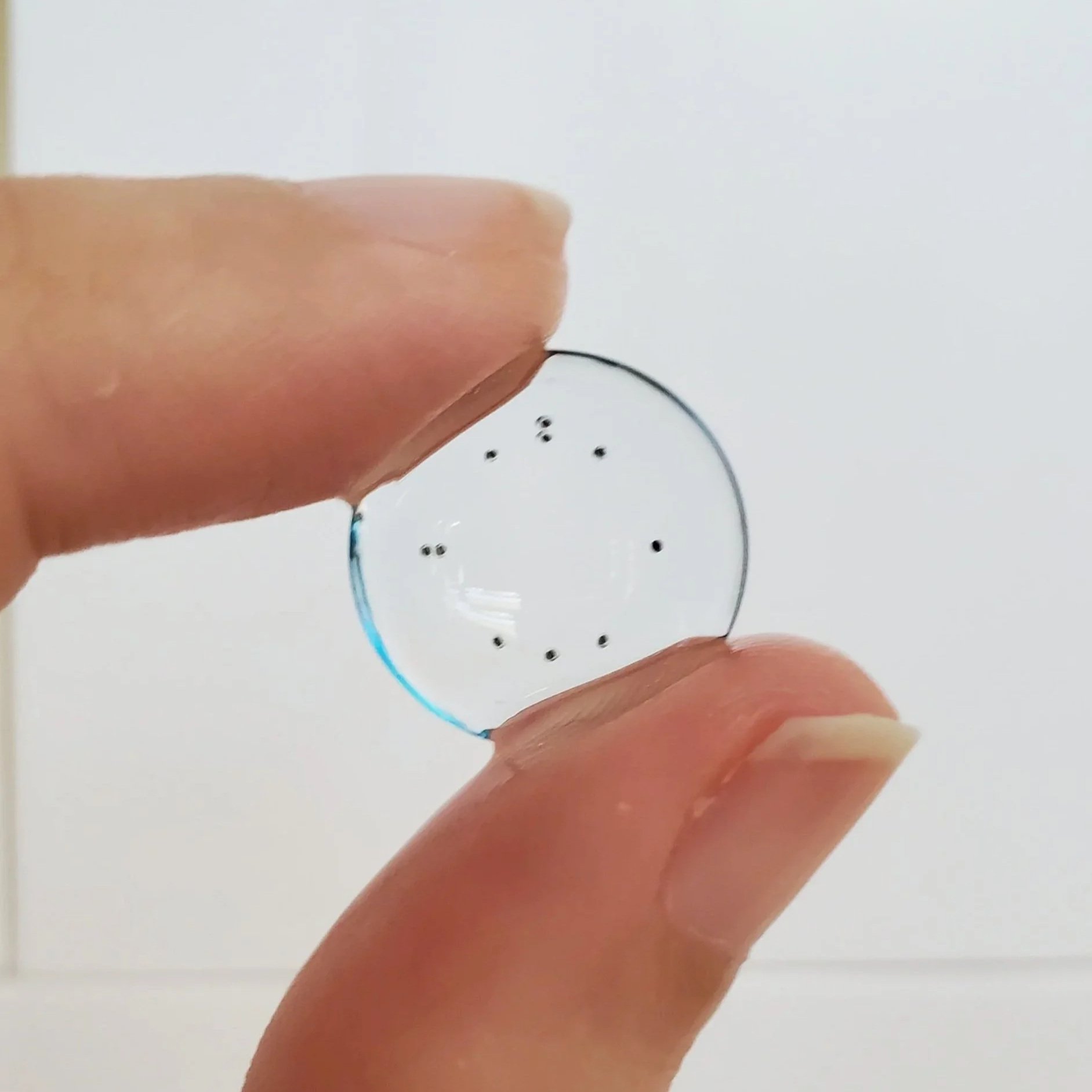
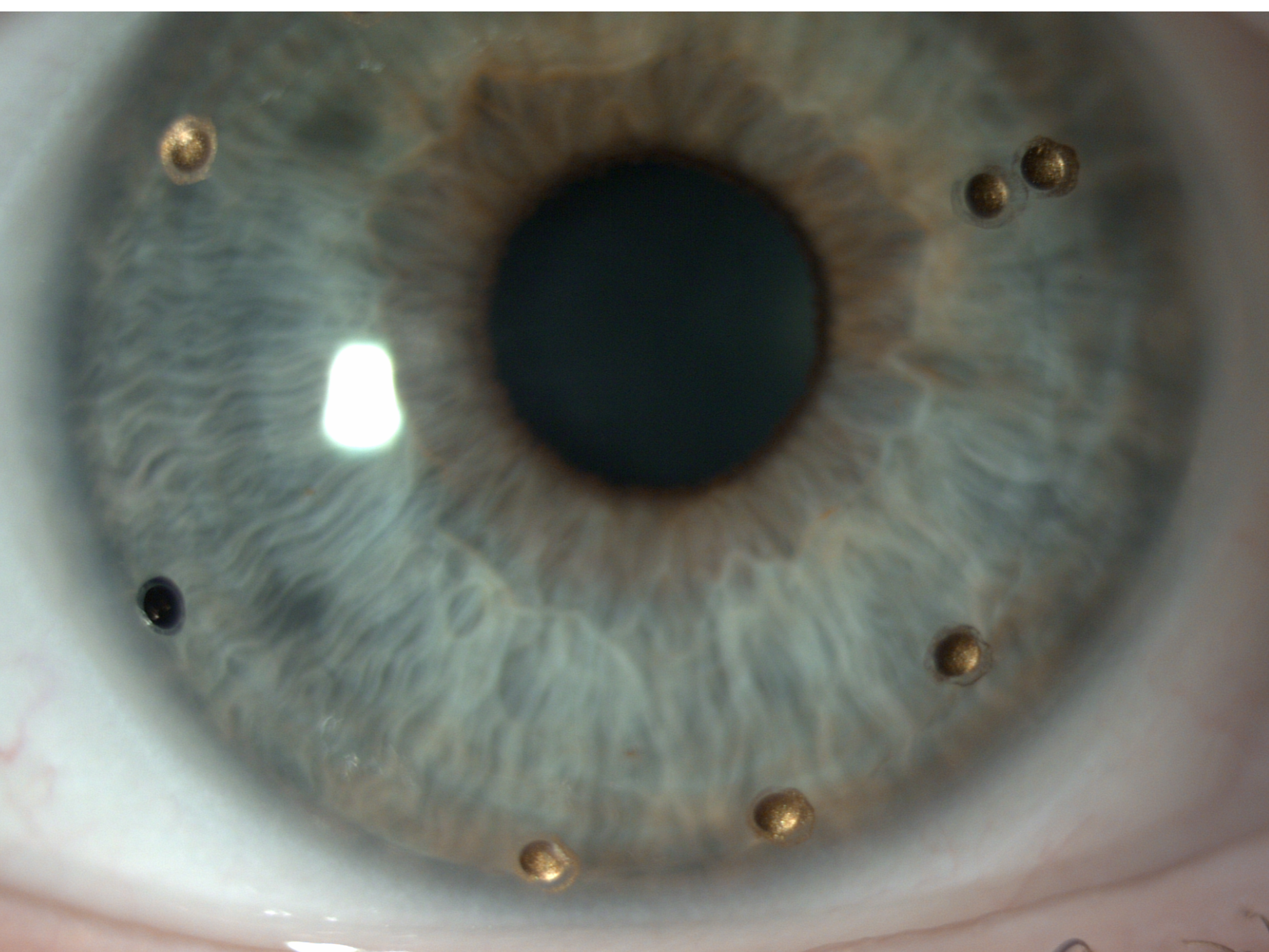
In our office, we use the Ovitz aberrometer to measure the optical characteristics of a patient's eye, which includes both the lower-order aberrations as well as the higher order aberrations. This provides us with a detailed map of that particular eye's visual irregularities, which is then used to create a customized wavefront corrective scleral lens. This leads to enhanced visual acuity and reduced blur for patients with complex vision issues.
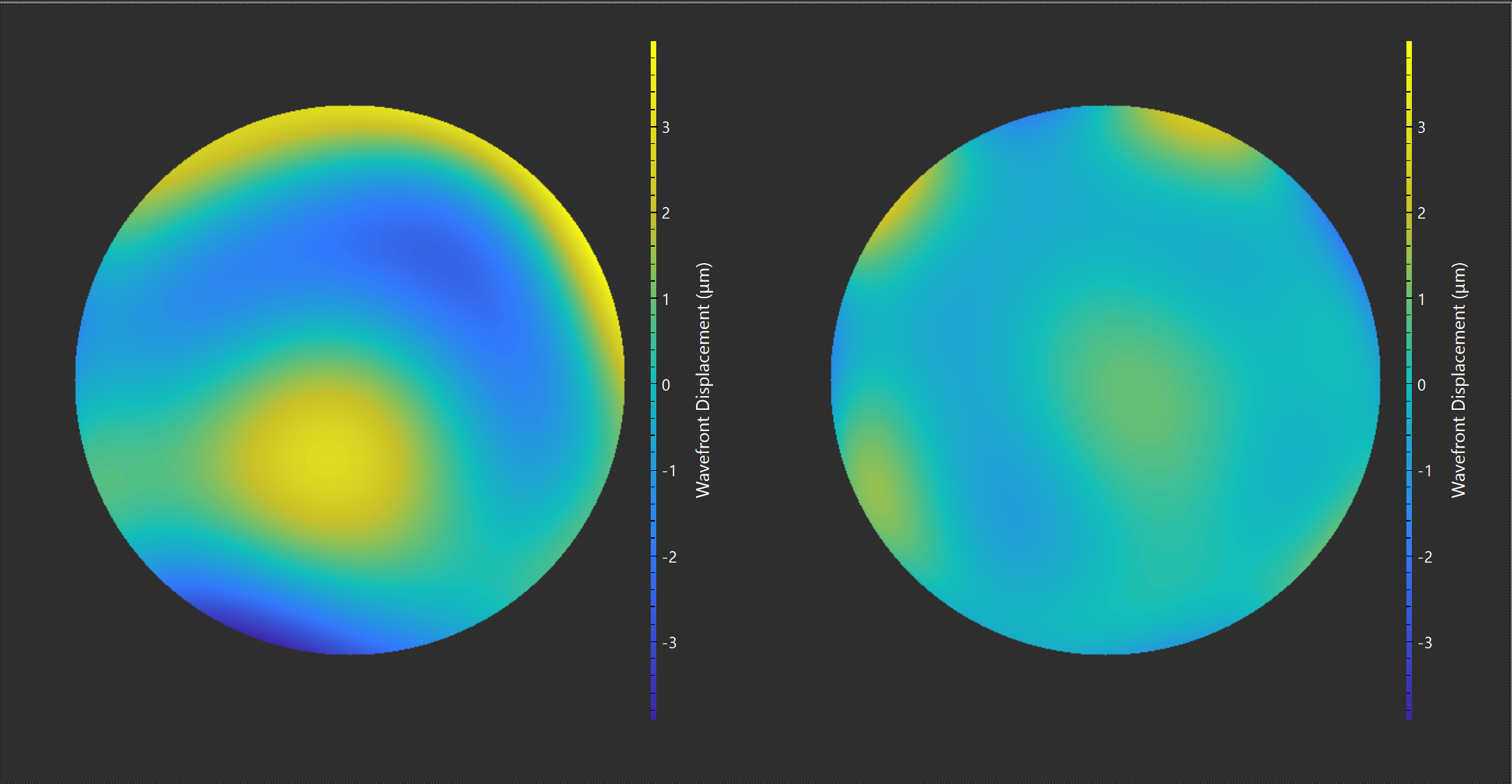
Wavefront map with traditional scleral lens showing irregularity (left); Wavefront map after HOA correction with Ovitz scleral lens (right)
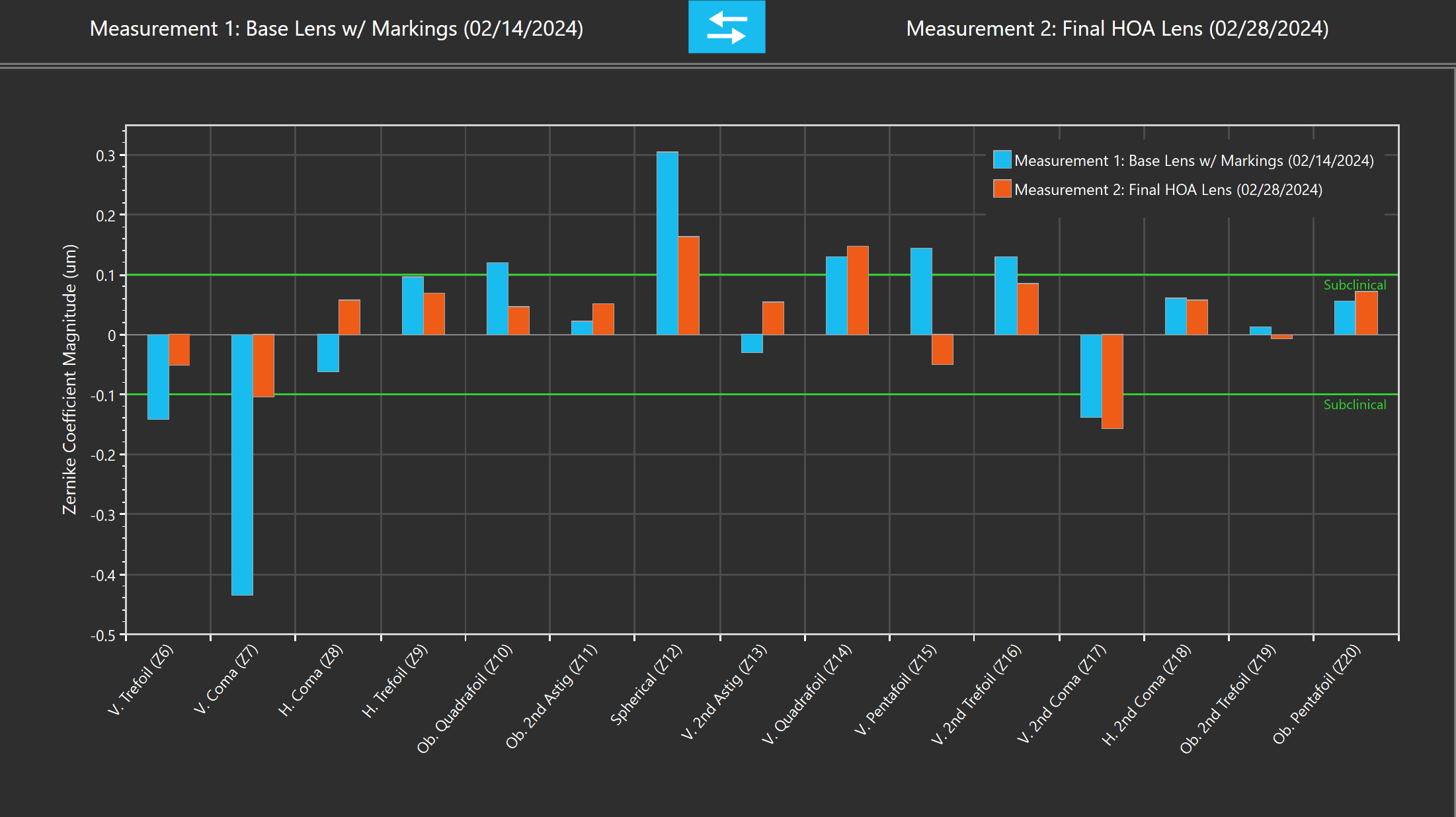
Graphs showing the amount of aberration reduction before (blue) and after (orange) the Ovitz wavefront scleral lens
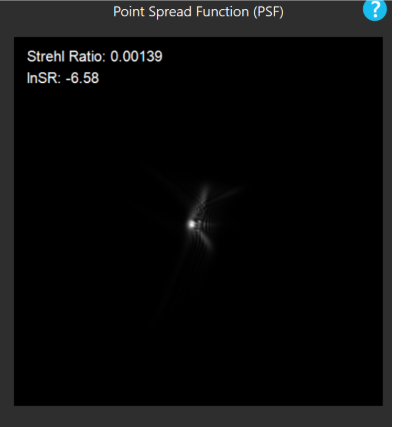
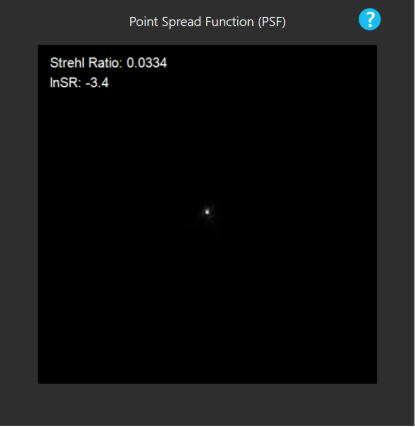
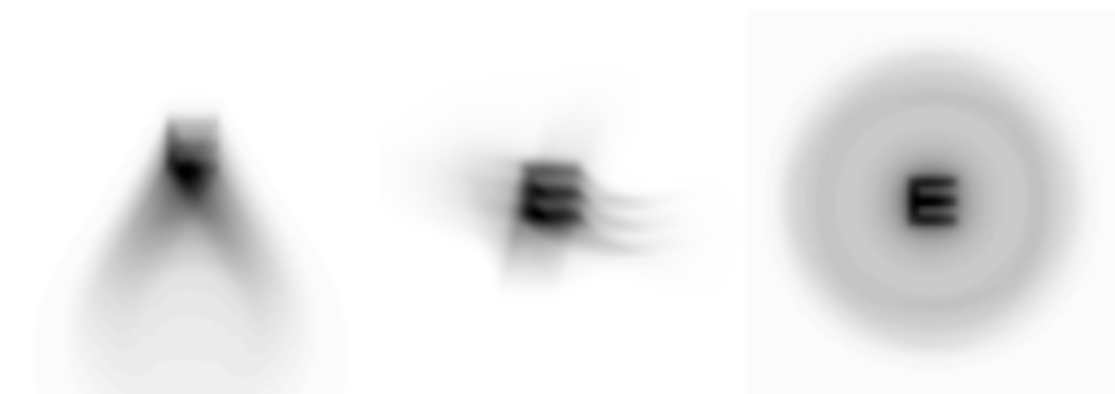
The point spread function of what a dot of light looks like before HOA correction (left); the point spread function after HOA correction (right) showing much less light spread